

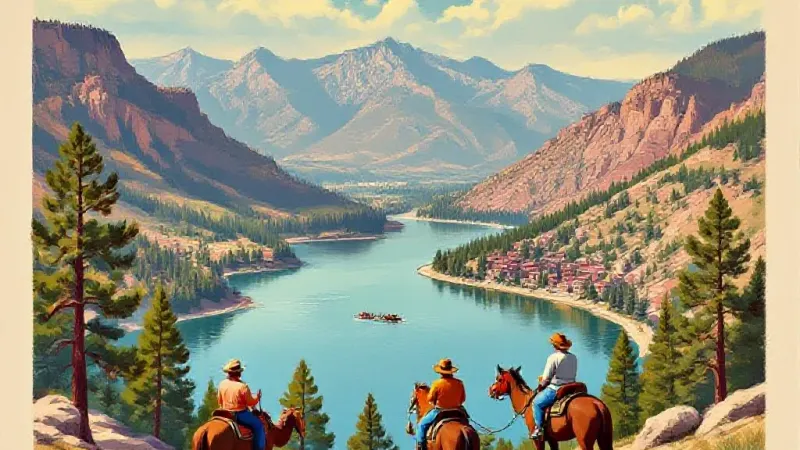
Havasu News reported on the history and lasting impact of Big Bear Lake, tracing its origins back to an ambitious nineteenth-century engineering project that permanently altered the region's landscape. In 1884, a group of ranchers from Redlands traveled north into the mountains, riding up more than 5,000 feet of elevation. Upon reaching the mountain location, the group constructed a rock dam designed to collect water for agricultural purposes. That early water management effort laid the physical foundation for the body of water that continues to define the surrounding mountain area today.
The creation of the rock dam in 1884 was recognized as an extraordinary undertaking for its era. When the Redlands ranchers completed the project, the newly created reservoir held the distinction of being the largest artificial lake in the world at that time. Completing such a massive project required overcoming significant elevation gains and harsh terrain, as the ranchers made the journey up over 5,000 feet to establish the water storage site. Their efforts permanently changed the geography of the high-elevation mountain area, creating a massive artificial reservoir to store essential agricultural water.
Prior to the construction of the rock dam, the local terrain presented a very different environment. The location was originally a expansive green valley that teemed with wildlife, serving notably as a habitat for grizzly bears. The installation of the dam and the subsequent accumulation of water forever reshaped that vibrant green landscape. What had been a valley dominated by natural wildlife and grizzly bears was converted into a managed water storage facility, altering the natural environment and redirecting the purpose of the land toward water collection.
In the present day, the legacy of that 1884 construction effort continues to anchor the local identity. Big Bear remains in many ways defined by the lake that resulted from the work of those early Redlands ranchers. The historic project, which began purely as a practical agricultural necessity to gather and store water, eventually became the central feature around which the local mountain community developed and grew over the subsequent decades.
In addition to its historic role in water collection, the lake currently serves as a vibrant backdrop for a four-season tourist destination. The presence of the water draws visitors throughout the entire year for a wide variety of outdoor activities. During the winter months, the surrounding mountain environment attracts winter sports enthusiasts, including skiers and snowboarders who utilize the high-elevation terrain for cold-weather recreation.
When the seasons change and warmer weather arrives, the recreational focus around the reservoir shifts accordingly. Throughout the summer season, the lake becomes a hub for outdoor activities on both land and water. Summer boaters navigate the reservoir created by the historic rock dam, while hikers explore the trails and mountain terrain that overlook the water. This combination of winter skiing, winter snowboarding, summer boating, and summer hiking establishes the area as a popular year-round environment for outdoor recreation.
The transition of the valley from an 1884 agricultural reservoir project to a modern four-season recreational hub illustrates the historic impact of the early ranchers from Redlands. By climbing over 5,000 feet in elevation to assemble a rock dam, they constructed what was then the largest artificial lake in the world. In doing so, they forever transformed a green valley once filled with grizzly bears into a landmark body of water that continues to define Big Bear for residents, visitors, hikers, boaters, skiers, and snowboarders today.